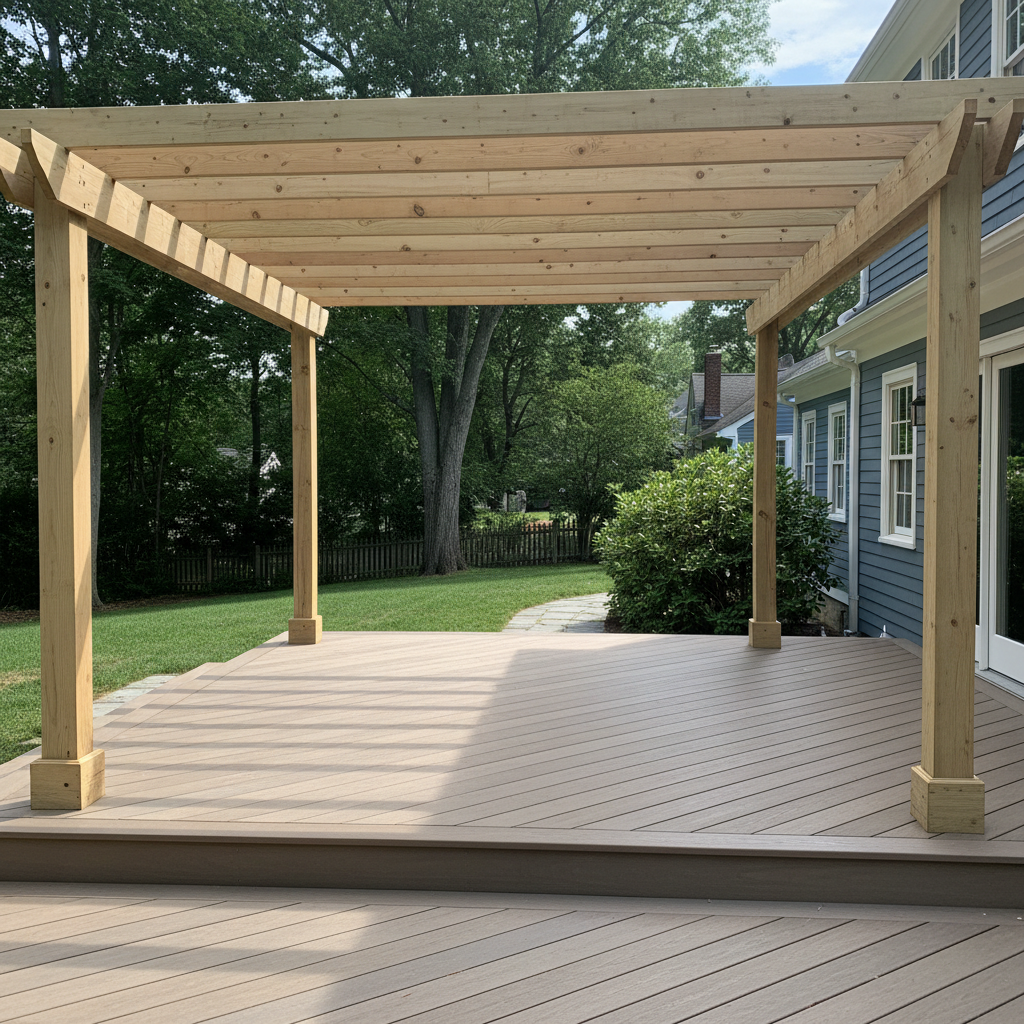
You have a pergola in your backyard. Maybe it is near Belmont Center or over in Payson Park. It is a good spot for relaxing. But living in Massachusetts means our outdoor structures get a lot of wear and tear. We get humid summers, freezing winters, and everything in between. This is why keeping up with your pergola's maintenance is not just a suggestion. It is important if you want it to last.
Extending Your Pergola's Lifespan in New England Weather
First, let us talk about getting the most out of your investment. When Belmont Deck Solutions builds a pergola, we use materials and construction methods. These are designed to stand up to our local climate in Belmont, including heavy winds and snow loads. But even the best-built structures need some help from you.
- Seal and Stain Regularly: If you have a wood pergola, like cedar or pressure-treated wood, this is your most important task. Our climate, with its big temperature changes and moisture, can really stress wood. You will want to re-seal or re-stain your wood pergola every 1 to 3 years. The time depends on the product you use and how much sun your pergola gets. This makes a barrier against rain, snow, and that summer humidity. This moisture can lead to rot for your wood pergola. It is like sunscreen for your pergola.
- Keep it Clean: Dirt, pollen, and mildew are not just bad to look at. They can trap moisture against the wood or composite surfaces of your pergola. Give your pergola a good wash down at least once a year. It is best to do this in the spring after the winter grime has settled. A mild soap and water solution with a soft brush usually works well. For composite pergolas, this is often all the maintenance you will need for your Belmont pergola.
- Trim Back Vegetation: Those climbing vines or nearby tree branches can look nice. But they can also hold moisture against your pergola's frame. This can lead to rot or pest issues for your pergola. Keep them trimmed back so there is good airflow around the pergola structure.
- Check Fasteners: Over time, with all the expansion and contraction from our temperature changes in Belmont, screws and bolts can get loose. A quick check each spring and fall to tighten anything that feels wobbly can stop bigger structural problems later on.
Regular Maintenance: Your Seasonal Checklist
Here is a simple seasonal breakdown to keep things manageable for your pergola maintenance:
Spring (After the last frost, usually mid-April)
- Inspect Thoroughly: This is your big annual check-up for your pergola. Look at every post, beam, and slat. Check for cracks, splinters, peeling finishes, or any signs of insect activity on your Belmont pergola.
- Clean: As we said, wash away winter's accumulation from your pergola.
- Re-seal/Re-stain (if needed): If your last application was a couple of years ago, or if you see the finish wearing thin, now is the time for your pergola. Make sure the wood is clean and dry before you put on the new finish.
Summer (Especially during muggy July and August)
- Keep an Eye on Humidity: Belmont summers can be very muggy. Relative humidity is often around 68-73% in August and July. This means moisture is in the air, and wood can take it in. Make sure there is good ventilation around your pergola.
- Quick Checks: Just a casual look while you are enjoying your backyard. Spot any new issues like insect nests or small cracks on your pergola? Address them early.
Fall (Before the first snow, typically early November)
- Clear Debris: Remove any fallen leaves or branches from the top of your pergola. You do not want them trapping moisture or adding extra weight when the snow starts.
- Final Inspection: Another good look-over before winter sets in. Address any minor repairs on your pergola now, before freezing temperatures make them worse.
Winter (November through April)
- Snow Load Awareness: Belmont gets a lot of snow. January averages over 10 inches. Your pergola is built to handle typical snow loads. But very heavy, wet snow or ice can be a problem for your pergola. If you have an attached pergola, make sure snow is not piling up against your house. If you see too much snow, gently remove it with a soft broom or snow rake if it is safe. Do not use sharp tools that could damage the finish or the pergola structure.
Warning Signs of Problems
You do not need to be a contractor to see trouble with your pergola. Here is what to look for:
- Soft or Spongy Wood: Press on the wood of your pergola with your thumb or a dull tool. If it feels soft, crumbles, or gives way easily, you likely have wood rot. This is a big problem, especially in our damp climate in Belmont.
- Discoloration: Darker or grayish patches on wood can mean moisture damage or rot for your pergola.
- Peeling or Bubbling Paint/Stain: This often means moisture is trapped underneath the finish of your pergola. This is a sign that rot might be coming.
- Visible Fungi or Mold: Any growth on the wood of your pergola is a bad sign.
- Cracks or Splits: Small hairline cracks are normal with wood. But large or spreading cracks, especially in structural beams, are a concern for your pergola.
- Wobbling or Leaning: If any part of your pergola feels unstable, or if posts are visibly leaning, that is a serious structural issue.
- Insect Activity: Sawdust, small holes, or tunnels are signs of carpenter ants or other wood-boring insects in your pergola.
- Musty Odor: A smell that is always earthy or musty can point to hidden moisture and rot in your pergola.
When to Call a Professional
Some minor repairs for your pergola are easy to do yourself. But there are times you absolutely need to call in the professionals. Do not wait if you notice these problems with your pergola:
- Significant Wood Rot: If the rot is widespread, in a structural part, or you are not sure how deep it goes, call us. We can check the damage and decide if replacement or repair is needed for your pergola.
- Structural Instability: Any wobbling, leaning, or visible shifting of posts or beams means your pergola is not safe. This needs immediate attention from experienced builders like Belmont Deck Solutions.
- Large Cracks or Splits: Especially in main support posts or overhead beams of your pergola.
- Persistent Leaks: If your pergola has a solid roof section and you are seeing leaks, it could mean flashing problems or damage that needs expert repair.
- Pest Infestations: If you think you have termites or a lot of carpenter ant damage, a pest control specialist and then a contractor might be needed for your pergola.
- Permit Questions: Remember, pergolas are considered structures in Belmont. They might need a permit, especially for big repairs or changes. We can help you with that.
Taking care of your pergola is not just about how it looks. It is about safety and protecting your property value in Belmont. A little regular attention goes a long way. It makes sure your outdoor area stays a valued part of your Belmont home for many seasons to come. Belmont Deck Solutions provides pergola services for homes in Belmont, MA.