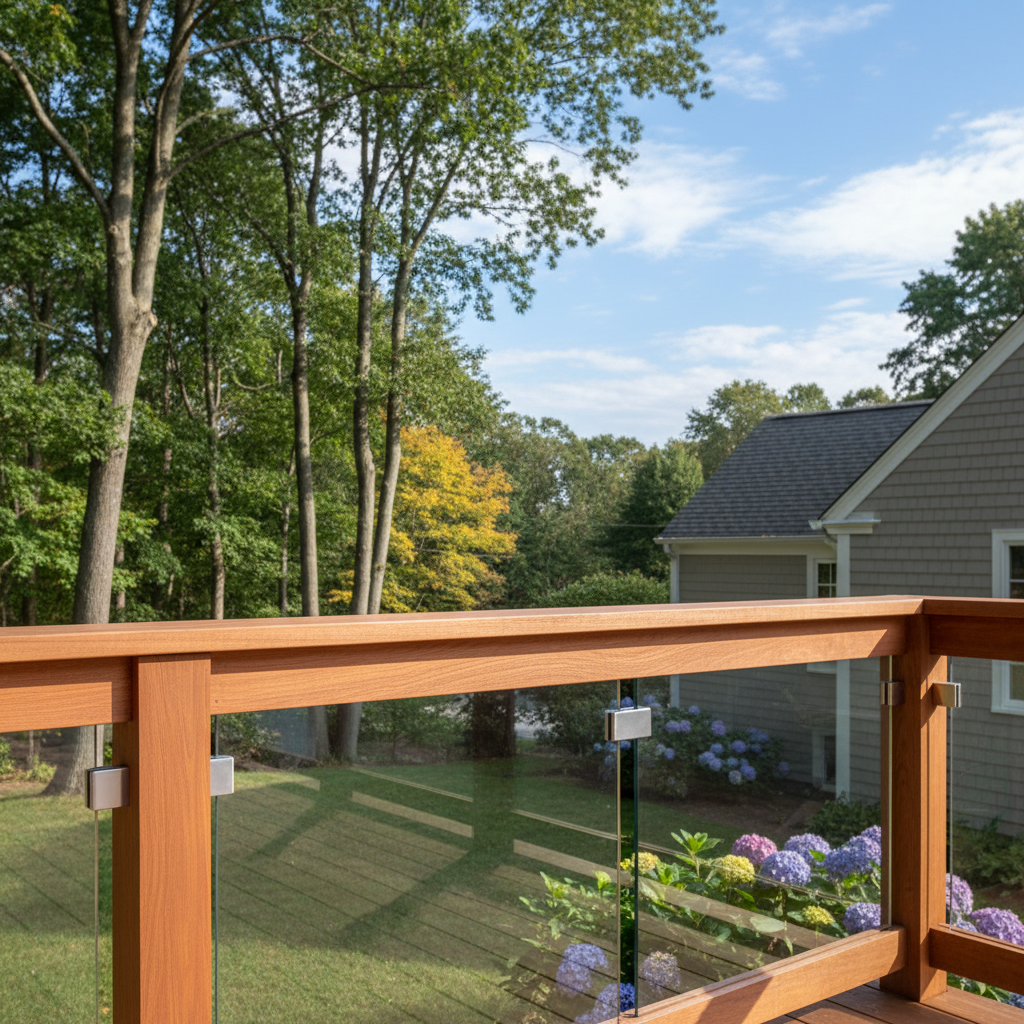
What are the most popular railing materials for decks in Belmont, and why?
When it comes to deck railing materials, you've got some really solid options, each with its own good points and drawbacks. Here in Belmont, I've noticed a lot of homeowners tend to pick from three main types: pressure-treated wood, composite, and aluminum.
Wood is just classic, isn't it? It's usually the cheapest to buy initially, and it gives you that timeless look that fits right in with many of the older homes in spots like Belmont Hill. The catch? It needs regular upkeep – you'll be staining or painting it every couple of years if you want it to stay looking sharp and last. Our New England weather, with those tough winters and sticky summers, really beats up wood if you don't keep after it. You'll definitely see cracking, splintering, and fading if it's left alone.
Composite railings are a definite step up when you think about maintenance. They're made from a blend of wood fibers and plastic, so they're super tough and don't ever need painting or staining. Just a good scrub now and then usually does the trick to keep them clean. They come in tons of colors and styles, often looking just like wood but without all the fuss. They do cost more upfront than wood, sure, but you'll save a bundle on maintenance over the years. For busy families, that's a huge win.
Then there's aluminum. This is a fantastic choice if you're after something sleek, modern, and practically maintenance-free. It's strong, won't rust, and comes with various powder-coated finishes that hold up incredibly well. It's usually the most expensive to start with, but it'll last forever and looks incredibly sharp. If you're aiming for a more contemporary deck design, or you want to maximize your view without bulky posts getting in the way, aluminum with cable infill is a popular choice I've installed quite a bit.
How do local building codes in Belmont, MA affect railing height and spacing?
This is a big one, seriously, and it's not something you want to just guess at. Belmont follows the Massachusetts State Building Code, which is actually based on the International Residential Code (IRC). For deck railings, the main things you need to know about are height and baluster spacing.
Generally speaking, any deck surface that's 30 inches or more above the ground absolutely needs a guardrail. The very top of that guardrail has to be at least 36 inches high for residential decks. Now, if your deck is part of a commercial property or a multi-family dwelling, that height often jumps to 42 inches, but for most Belmont homeowners, 36 inches is the rule.
And then there's the baluster spacing, which is super important for safety, especially if you have kids or pets running around. The code states that a 4-inch sphere shouldn't be able to pass through any opening in the railing. That means your balusters (those vertical posts) need to be spaced no more than 4 inches apart. This stops small children from squeezing through or, heaven forbid, getting their heads stuck. It's a non-negotiable safety standard, plain and simple.
Also, if you've got any horizontal elements that someone could climb, like decorative rails or infill, you need to be careful. The code often has provisions to prevent a